
Content
Another type of blockchain bridge that operates in direct opposition to unidirectional bridges is the bidirectional bridge. A blockchain bridge that is bidirectional aids in ensuring smooth asset and data flow between two networks. Therefore, employing two different unidirectional bridges is preferable to using bidirectional bridges.
This approach satisfies the trustless element and can handle any data but cannot be generally applied; it requires a custom solution for each cross-chain bridge. Blockchain bridges are technical solutions for transferring data back and forth between two blockchains. Interestingly, the AVAX bridge takes your ethereum and turns it into wrapped ethereum . Considering various dApps will be built on AVAX, users and developers can take full advantage of Ethereum’s power.
Use Ethereum
There are many blockchain networks and cryptocurrencies that use different blockchain technologies, including Bitcoin, Ethereum, Avalanche, Polygon, Solana and Arbitrum. Enabling interoperability and exchange across different blockchain networks is an area where cross-chain bridges — sometimes also referred to as blockchain bridges — play an increasingly important role. But social engineering to take over privileged target accounts is also a classic attacker strategy that has been used widely, including in decentralized finance. Some blockchain bridges can handle a large number of transactions, improving efficiency. For example, the Ethereum-Polygon Bridge is a decentralized two-way bridge that works as a scaling solution to the Ethereum network.
This comes at the cost of security, as users have to rely on the security of the bridge. As the internet transitions to Web3, the demand for blockchain bridges will probably continue to increase. Future advancements might give users and developers more scalability and efficiency.

Next, look for any options in the network configuration settings called “Bridge Mode,” “Bridging,” “IP Passthrough,” or similar. When you find the bridge mode settings, you will need to input the new router’s MAC address as the destination address. This tells your old router which new piece of network hardware is the endpoint for the bridged network traffic. Now, it’s more common for ISPS to supply an all-in-one unit that is both an internet modem, a router, and a Wi-Fi access point rolled together. So common, in fact, that many people don’t realize that the modem and router functions are separate.
Blockchain bridges can be designed to interchange any sort of data, including smart contract calls, decentralized identities, off-chain information like stock market price feeds, and much more. The most popular use of blockchain bridges is token transfer, although they are also capable of converting smart contracts and transmitting data. The two biggest cryptocurrency networks, for instance, bitcoin and Ethereum, have radically different policies and protocols. Bitcoin users can move their coins to Ethereum and use them in ways that would otherwise be impossible on the bitcoin blockchain by using a blockchain bridge. That may entail making low-cost payments or buying multiple Ethereum tokens. Every blockchain project features specific defining parameters unique to the project, which create problems with interoperability.
Scope for a Blockchain Bridge
This blog wil discuss the definition and operation of blockchain bridges. We’ll also demonstrate the concept through example scenarios to understand why blockchain bridging what is a blockchain bridge and how it works is a boon for developers, industries, and people worldwide. For example, trusted blockchain bridge presents the concerns of censorship due to centralized control.
Dapps to access the strengths of various blockchains – thus enhancing their capabilities . But if you’re upgrading your Wi-Fi router by replacing an old Linksys Wi-Fi router with a newer model, there is no reason to put the old model in bridge mode and connect the new one to the old one. You should simply retire the older hardware after taking note of the settings, and then factory resetting it. If your ISP-supplied router/modem only supports IP Passthrough mode, you still shouldn’t have any problems.
- Having to pay fees every time you make a cross-chain transaction may discourage adoption from a mainstream audience less concerned about principles like decentralisation and more focused on tangible cost and benefits.
- If your ISP-supplied router/modem only supports IP Passthrough mode, you still shouldn’t have any problems.
- Since then, an explosion of blockchain networks have been created, with a huge variety of designs and intended functionality.
- While some blockchain bridges are centralized, others preserve the all-important decentralization that helps ensure the security and openness of DeFi protocols.
- In February the Wormhole Bridge hack saw 120,000 Wrapped Ether tokens, valued at $326million, stolen from the Solana side of a bridge to Ethereum.
- Any remaining ETH will be burned when you want to convert back to BTC, and you will get an equivalent amount of BTC in your wallet.
ChainPort introduces an unprecedented level of security architecture, porting tokens safely across blockchains with just a click. The code used in ChainPort’s smart contracts is all original and not publicly viewable. Not revealing the code behind the bridge minimizes potential attack vectors. Burn & Mint bridges bear many resemblances to lock and mint bridges but are non-reversible. Upon bridging tokens, the original tokens on chain A are sent to a burn address, and new tokens are issued on chain B. Should a user want to bridge the tokens back to chain A, the tokens once again go through a burn and mint process.
Why do we need bridges?
Notably, the bridge aggregators typically maintain the bridge integrations, which saves the dapp from the hassle of staying on top of the technical and operational aspects of a bridge integration. The following are two types of blockchain bridging currently in existence. As part of the proof-of-work consensus, the origin chain generates sequences of headers for free for honest transactions.

CoinDesk is an independent operating subsidiary of Digital Currency Group, which invests in cryptocurrencies and blockchain startups. As part of their compensation, certain CoinDesk employees, including editorial employees, may receive exposure to DCG equity in the form of stock appreciation rights, which vest over a multi-year period. CoinDesk journalists are not allowed to purchase stock outright in DCG. Many DeFi protocols have integrated bridges to let their users swap tokens from different protocols without having to leave the platform. This makes the process of converting tokens through bridges less cumbersome.
Advantages Of Blockchain Bridges
They are also strong with security because they do not require additional trust assumptions, although there is a liveness assumption because a relayer is still required to transmit the information. These are also the most capital-efficient bridges because they do not require any capital lockup whatsoever. For each chain pair, developers must deploy a new light client smart contract on both the source and destination chain, which is somewhere between O and O complexity .
But if you’re putting in a new Wi-Fi router with current support and security updates, you shouldn’t have any problems. And if you reused the same Wi-Fi credentials, you’ll have even more problems as now two different routers will be broadcasting the same SSID. Binance Bridge, Celer cBridge and Wormhole are just a few of the cross-chain bridges available today. This could either be in the form of censorship of access or transaction, bad faith on the part of the central point of control or the vulnerability to external attack. In both cases one side of the bridge was exposed through a technical vulnerability. This doesn’t just lead to the loss of assets held by the exposed end of the bridge but has significant knock-on effects.
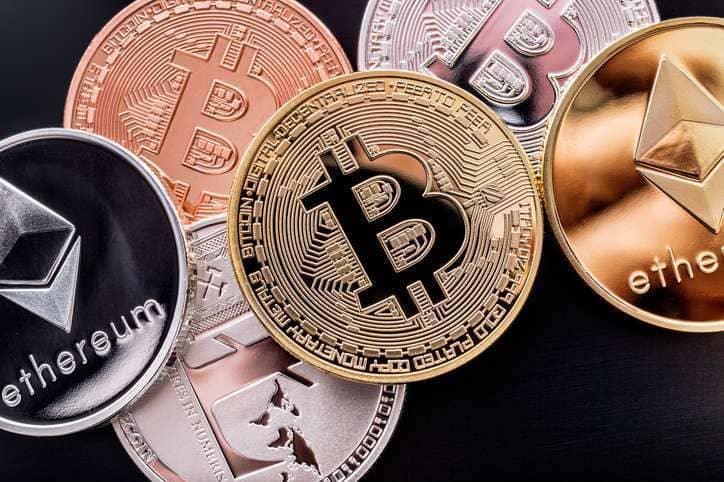
The main idea of blockchain bridge is to act as a way of interaction between different blockchains. Many blockchains lack interoperability, which means that they cannot communicate well with each other alone. Despite the importance of blockchain interoperability, cross-chain systems may face some challenges when transacting assets or data from one chain to another. Once the transaction is complete, a confirmation is sent across the chains, followed by a waiting period for further security.
Bridging the gap between blockchains
One way bridge allows you to send assets only to the target blockchain, but not to return its native blockchain. For example, wrapped bitcoin allows you to transfer bitcoin as ERC-20 token to Ethereum, but you cannot send ETH back to bitcoin blockchain. Unidirectional bridges would be the next type of blockchain bridge listed.
Not everyone needs bridge mode for their home network, but if you’re in the camp that does, it’s a must-have feature that saves you from a lot of headaches. There’s a feature hidden away in many routers that perform a crucial function when using your own Wi-Fi router with your internet service provider’s hardware. The Celer cBridge uses the Celer State Guardian Network to enable liquidity across different blockchains. Akartuna notes that better securing bridges will involve more oversight and audit of the platforms’ complex code. Services that liaise between already esoteric platforms can’t just be thrown together without extensive and continuous vetting. Blockchain bridges are a crucial piece of the cryptocurrency ecosystem, which makes them prime targets for attacks.
How New Blockchain Apps Make It Easier To Use DeFi
There is no utopian solution to the problem of blockchain interoperability. Blockchain bridges will evolve and improve, and users migrate to the most convenient and cost-effective ways to leverage the full value of their crypto assets without being restricted to a single blockchain domain. The development of the blockchain industry is driven by constant innovations.
Blockchain bridges: Guide to cross-chain data sharing
Decentralised bridges provide solutions to blockchain interoperability that are trustless but struggle to apply to any domain or any type of asset. You can understand the role of blockchain bridges by imagining two planets that want to exchange goods. They have entirely different languages and ways of conducting trade but don’t trust each other. NEAR is a proof-of-stake network hoping to take advantage of the NFT craze. It allows developers to build unique, NFT-powered decentralized applications on a platform separate from Ethereum, though the Rainbow bridge ensures Ethereum users can take advantage of such an offering.
Why Would I Want to Use Bridge Mode?
A blockchain bridge is a protocol connecting two blockchains to enable interactions between them. If you own bitcoin but want to participate in DeFi activity on the Ethereum network, a blockchain bridge allows you to do that without selling your https://xcritical.com/ bitcoin. Blockchain bridges are fundamental to achieving interoperability within the blockchain space. To evaluate trustless bridges based on other factors, we must break them down into generalized message passing bridges and liquidity networks.
